


Blog
Frame Damage After an Accident: Is Your Car Safe to Drive in the White Mountains?
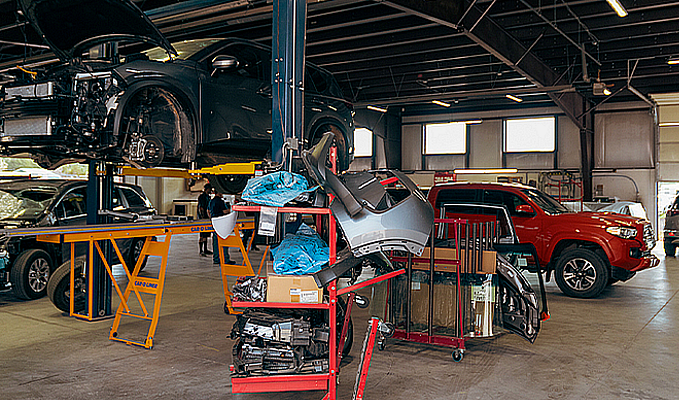
After a collision, it's natural to focus on what you can see — a crumpled bumper, a dented door, a cracked headlight. Visible damage is easy to evaluate and easy to talk about with an insurance adjuster. But some of the most consequential damage from a collision is the kind you can't see at all.
Frame damage is one of the most misunderstood outcomes of a car accident. Many drivers assume that if their car still drives and nothing obvious is broken, the vehicle is fine. In reality, frame damage can be present — and dangerous — without any obvious external signs. For drivers navigating the winding roads, elevation changes, and seasonal conditions of the White Mountains, understanding what frame damage means and when to be concerned is essential to your safety.
What Is a Vehicle Frame?
The frame — sometimes called the chassis — is the structural backbone of your vehicle. Everything else is built around it: the body panels, the engine, the suspension, the safety systems. When the frame is in proper condition, the vehicle handles predictably, absorbs road impacts correctly, and responds as designed in a collision.
Modern vehicles are built with what's called a unibody construction, meaning the body and frame are integrated into a single structure rather than being separate components. This design makes vehicles lighter and more fuel-efficient, and it allows the structure to crumple in controlled ways during a crash — directing energy away from the passenger compartment.
That crumple behavior is intentional. But it also means that even a moderate collision can cause the unibody structure to shift, compress, or deform in ways that affect how the vehicle performs long after the accident.
How Does Frame Damage Happen?
Frame damage doesn't always require a high-speed collision. Accidents that seem relatively minor — a front-end impact at 25 mph, a side collision in a parking lot, or even running over a large road hazard — can cause structural displacement that isn't apparent from the outside.
The severity of frame damage depends on the angle of impact, the point of contact on the vehicle, and the structural design of that particular make and model. In some cases, a collision that produces very little visible body damage causes significant frame misalignment underneath. In others, a badly damaged exterior may have protected the frame more effectively than expected.
The only reliable way to know whether your frame has been affected is a professional inspection using precision measurement equipment — not a visual assessment alone.
Signs That Your Vehicle May Have Frame Damage
While frame damage isn't always visible, there are warning signs that may appear after an accident. If you notice any of the following, your vehicle needs a professional inspection before you continue driving it:
- Uneven handling or pulling to one side — If your vehicle drifts or requires constant steering correction on a straight road, the frame alignment may be off.
- Unusual tire wear — Misalignment caused by frame damage often shows up as irregular or accelerated wear on one or more tires.
- Doors or windows that don't close properly — A shifted frame changes the geometry of the door and window openings. If gaps appear or things suddenly don't align the way they did before, that's a signal.
- Visible creasing or bending under the vehicle — In some cases, damage is visible along the rocker panels, undercarriage, or wheel wells.
- Suspension or steering that feels different — Frame misalignment often affects how the suspension and steering components are positioned, changing how the vehicle feels on the road.
- Noises that weren't there before — Creaking, rattling, or grinding sounds after a collision can indicate structural stress that needs investigation.
If you're experiencing any of these symptoms after an accident — or after hitting a pothole, curb, or road hazard — don't ignore them. On the mountain roads around Show Low, Pinetop, and Lakeside, where sharp turns, elevation changes, and occasional ice make vehicle handling critical, a frame that's out of spec is a genuine safety risk.
Why Frame Damage Affects More Than Just the Ride
A vehicle with an unaddressed frame issue isn't just uncomfortable to drive — it's less safe in the event of a future collision. Modern vehicle safety systems — crumple zones, airbag deployment, structural reinforcement — are engineered to work together based on factory frame geometry. When the frame is misaligned, those systems may not perform as intended in a second impact.
Frame damage also affects the alignment of your wheels, the wear rate of your tires, the function of your suspension, and the long-term reliability of connected components. Over time, driving on a compromised frame accelerates wear throughout the vehicle in ways that become increasingly expensive to address.
There is also a resale consideration. Vehicles with undisclosed or improperly repaired frame damage carry diminished value — and buyers who run a vehicle history report or have a pre-purchase inspection done will often discover it. Proper frame repair, documented by a certified shop, protects your vehicle's long-term value as well as your safety.
What Does Proper Frame Repair Look Like?
Frame straightening is a precise, equipment-dependent process. It is not something that can be done correctly with general tools or improvised techniques. At Heck's Collision Center, frame straightening is performed using advanced measurement and alignment systems that compare your vehicle's current dimensions to the manufacturer's original specifications — down to fractions of a millimeter.
The process typically involves anchoring the vehicle and applying carefully controlled force to return the displaced structure to its factory geometry. In some cases, structural components that have been compressed or cracked need to be replaced rather than straightened. Either way, the goal is the same: a vehicle that meets factory spec and performs as designed.
Because this work requires both specialized equipment and up-to-date technical knowledge — particularly for newer vehicles with advanced high-strength steel and aluminum structures — certification matters. Heck's holds I-CAR Gold Class certification, which means the technicians performing this work have completed ongoing training in current repair methods and structural repair standards. This isn't a one-time credential — it requires continuous education to maintain.
Can You Drive a Car With Frame Damage?
The answer depends on the extent of the damage. Minor frame misalignment might not immediately prevent a vehicle from driving, but that doesn't mean it's safe. The longer you drive on a compromised frame, the more stress you're placing on surrounding components — and the more opportunity there is for a situation to become dangerous.
If you have any reason to suspect frame damage after an accident, the responsible choice is to have the vehicle inspected before continuing to drive it. This is especially true if the accident involved a direct impact to the front or rear of the vehicle, a side collision that pushed the vehicle sideways, or any contact that felt significant even at low speed.
Heck's Collision Center offers 24-hour towing service throughout Northeastern Arizona. If your vehicle isn't safe to drive, you don't have to find a way to get it to the shop — the shop can come to you. Call 1.928.368.2288 for towing assistance.
Don't Wait on This One
Frame damage is one of those things that tends to get worse — not better — the longer it goes unaddressed. Roads in the White Mountains aren't forgiving to vehicles that are already structurally compromised. Whether you've just been in an accident or you've been noticing handling issues for a while, a professional inspection is the right first step.
At Heck's, every vehicle that comes in after an accident receives a thorough structural assessment as part of the repair process. If frame damage is present, the team will explain exactly what was found, what the repair involves, and what it means for your vehicle's safety going forward. You can also review before-and-after examples of completed repairs to get a sense of the quality of work the shop produces.
Heck's Collision Center
2701 Porter Mountain Rd., Lakeside, AZ 85929
928.368.2288 — including 24-hour towing
Monday – Friday: 8:00 AM – 5:00 PM
Request your free estimate online or call the shop directly. Serving Show Low, Pinetop-Lakeside, Snowflake, Taylor, Lakeside, and all of Northeastern Arizona.
‹ Back
Recent Posts
-
When Is a Car "Totaled"? Understanding Total Loss vs. Repair in Arizona
September 8, 2026
-

-
-
-