


Blog
Black Ice in the White Mountains: Where It Hides and What to Do When You Start to Slide
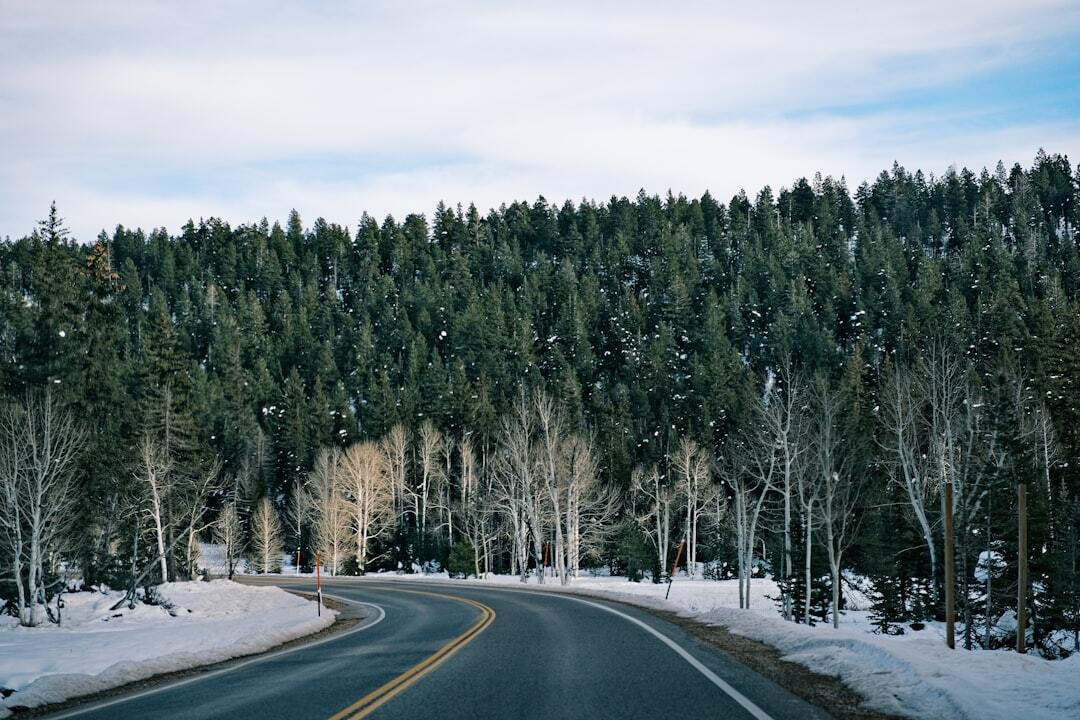
Ask anyone who has driven the White Mountains through a few winters about black ice and you will get a story. It is the hazard that catches experienced drivers, not just newcomers, because it does not look like a hazard. The road appears wet, or simply dark, and everything feels normal right up until it does not.
Understanding where black ice forms and what to do in the first two seconds of a slide is genuinely useful knowledge up here. It prevents collisions, and when a slide does happen, it often determines whether you end up with a scuffed wheel or a serious impact.
What Black Ice Actually Is
Black ice is a thin, transparent layer of ice on the road surface. It is not black. It is clear, which means you see the dark asphalt through it and your brain registers wet pavement. There is no white, no texture, and no glare to warn you.
It forms when moisture on the road freezes without turning into visible snow or frost. That moisture can come from melted snow that refroze, from fog and condensation, from a spring or seep running across the road, or from the water thrown by a vehicle ahead of you.
Where It Forms in the White Mountains
Black ice is not evenly distributed. It concentrates in specific, predictable places, and knowing them is most of the battle.
- Bridges and overpasses. They lose heat from above and below, so they freeze before the road on either side. This is the classic one, and the warning signs exist for a reason.
- Shaded stretches. Anywhere the pines or a north-facing cut keep the sun off the pavement all day. On the 260 and the forest roads, a shaded curve can be iced while the sunny straight before it is bone dry.
- Low spots and dips, where cold air settles and moisture collects.
- Near water. Anywhere close to the lakes, a creek crossing, or a seep running across the road.
- Intersections and stop signs, where packed snow from stopping and starting gets polished into ice.
- The first and last hours of daylight, when the temperature crosses freezing and yesterday's melt refreezes.
The most dangerous condition of all is a sunny afternoon that melted snow, followed by a clear night. That melt runs onto the pavement, the temperature drops, and by early morning there is a sheet of ice exactly where the water was running.
The Temperature Trap
Many drivers assume ice is only a concern well below freezing. In practice, the range right around 32 degrees is the most dangerous, because that is when you get liquid water on a surface cold enough to freeze it. At 10 degrees, the moisture is already frozen and frequently offers more grip than a thin film of water at 33.
Your vehicle's thermometer reads air temperature, not pavement temperature, and pavement in shade can be several degrees colder than the air. Treat anything near freezing as ice weather.
What to Do When You Start to Slide
The instinctive reactions are almost all wrong. Practice the correct ones mentally now, because there is no time to reason it out in the moment.
Get Off the Pedals
Do not brake. Do not accelerate. Both ask the tires for traction they do not have. Ease off the accelerator and let the vehicle slow on its own. If you have already hit the brakes and the vehicle is sliding, release them.
Look Where You Want to Go
This one sounds like a cliche and it is the most useful thing on the list. Your hands follow your eyes. If you stare at the guardrail you are sliding toward, you will steer into it. Pick the open lane, the shoulder, the gap, and look at it.
Steer Gently in the Direction You Want the Front to Go
If the rear of the vehicle is coming around, steer smoothly toward the direction the rear is sliding. Small, smooth inputs. A hard jerk of the wheel converts a recoverable slide into a spin, and the correction that follows an overcorrection is what puts vehicles off the road.
Be Patient
Black ice patches are usually short. Very often the correct response is to do almost nothing, hold your line, and wait the two seconds until the tires find pavement again.
What Actually Reduces Your Risk
- Slow down before you need to. Speed is the only variable you fully control, and every other factor gets more forgiving at lower speed.
- Increase following distance dramatically. Stopping distance on ice can be many times what it is on dry pavement.
- Make every input smooth. Braking, steering, and accelerating should all be gradual. Abrupt inputs break traction.
- Brake before the curve, not in it. Do your slowing on the straight while the tires are pointed where you are going.
- Watch the vehicle ahead. If spray suddenly stops coming off their tires, the water on the road just became ice.
- Keep good tires. Tread depth is what clears water and grips a cold surface. Nothing else on this list matters as much.
If a winter slide does end in contact with a guardrail, a snowbank, or another vehicle, get it looked at properly rather than assuming a scuff is only a scuff. Request a free estimate online and we will tell you what is actually going on underneath.
Why a Low-Speed Ice Impact Deserves a Real Inspection
Drivers routinely underestimate ice collisions because the speeds feel low and the visible damage looks minor. A slide into a curb, a snowbank with a rock in it, or a guardrail can do more than it appears.
Sideways impacts in particular load a vehicle in directions it is not designed to absorb. A curb strike at an angle can bend a control arm, damage a wheel, knock the alignment out, or transmit force into the subframe. A guardrail contact along the side can distort a door opening or a rocker panel enough to affect how the structure performs in a future crash.
Modern vehicles also carry sensors, cameras, and radar units in bumpers, mirrors, and windshields. An impact that only scuffs a bumper cover can still knock a sensor out of alignment, and a safety system that thinks it is aimed correctly but is not is worse than one that reports a fault.
Respect the Season
Black ice is a fact of life at this elevation. Knowing where it forms, treating anything near freezing as suspect, and having the right reaction ready before you need it will prevent the large majority of ice-related collisions. For the ones it does not prevent, get a proper inspection rather than a guess.
As an I-CAR Gold Class certified shop, Heck's Collision Center performs pre-repair scanning, structural measurement, and manufacturer-approved repairs, so what looks minor on the surface gets verified rather than assumed. We also offer insurance claim assistance if a claim is involved.
Browse completed work examples, or read what local drivers have said about their experience.
Heck's Collision Center
2701 Porter Mountain Rd., Lakeside, AZ 85929
928.368.2288
Monday to Friday: 8:00 AM to 5:00 PM
Request your free estimate online. Proudly serving Show Low, Pinetop-Lakeside, Lakeside, Snowflake, Taylor, and all of Northeastern Arizona.
‹ Back
Recent Posts
-
-
-
-
How to Read Your Collision Repair Estimate: A Line-by-Line Guide
September 29, 2026
-

Rental Cars and Loaners During Collision Repair: How Coverage Works in AZ
September 22, 2026