
Blog
How to Read Your Collision Repair Estimate: A Line-by-Line Guide
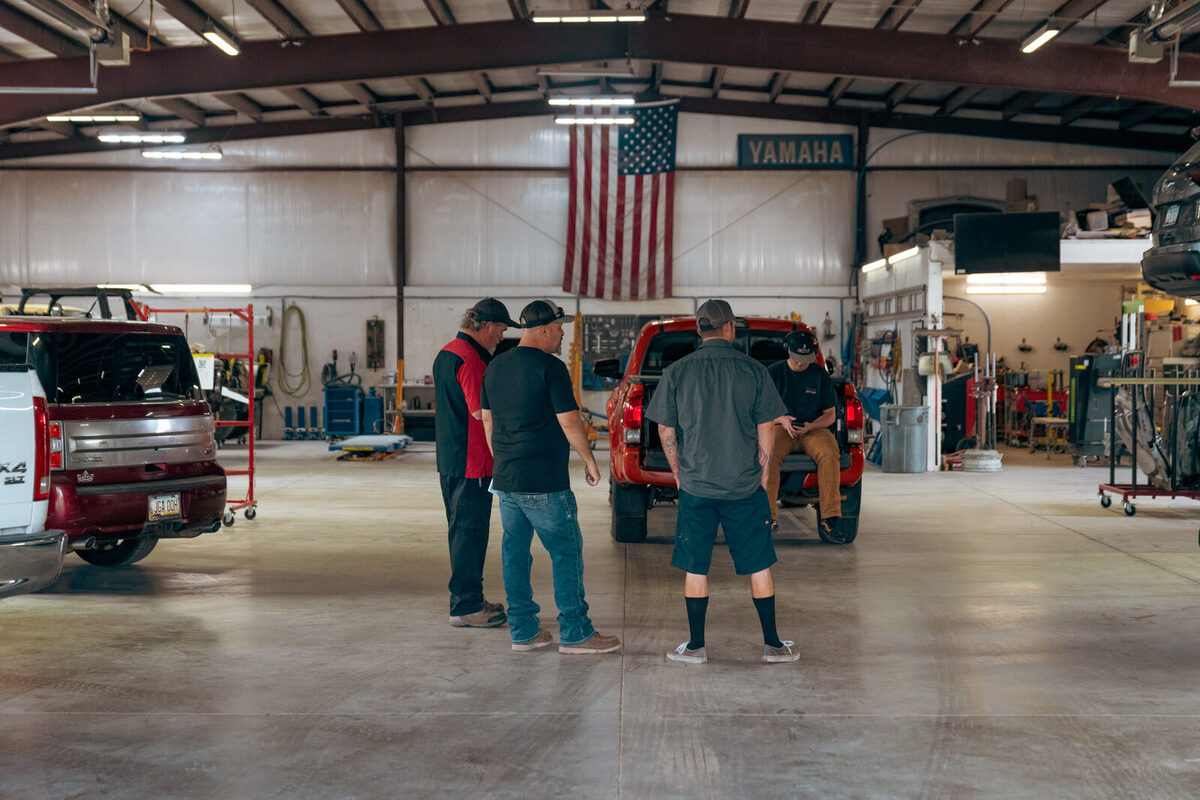
A collision repair estimate can be an intimidating document. It is full of line items, abbreviations, part numbers, and labor codes that make perfect sense to the people who write them and almost none to the average driver. But understanding your estimate is worth the effort, because it is the roadmap for your entire repair, and knowing how to read it helps you ask good questions and feel confident about the work being done.
Here is a plain-language guide to what is actually on a collision repair estimate and what each part means.
The Big Picture First
At its core, an estimate is a detailed list of everything required to return your vehicle to its pre-accident condition, with a cost attached to each item. It is broken into categories: parts, labor, paint and materials, and any sublet or specialty work. The total at the bottom reflects all of it. Understanding the categories makes the whole thing far less mysterious.
Parts: Where They Come From Matters
The parts section lists every component that needs to be replaced. You will often see codes or notes indicating the type of part, and this is worth paying attention to:
- OEM means Original Equipment Manufacturer, a new part made by or for your vehicle's maker, identical to what came on the car originally.
- Aftermarket parts are made by third-party manufacturers. Quality varies, and these are often specified by insurers because they cost less.
- Used or recycled parts, sometimes labeled LKQ for Like Kind and Quality, are OEM parts salvaged from other vehicles.
You have a say in which parts go on your vehicle, and it is reasonable to ask your shop to walk you through the parts being used and why. Structural and safety-related components in particular are areas where many drivers prefer OEM parts.
Labor: Not All Hours Are the Same
Labor is usually broken into types, each often billed at a different rate:
- Body labor covers removing, repairing, and replacing panels and structural work.
- Paint labor covers the refinishing process.
- Mechanical labor covers any mechanical components affected by the collision.
- Frame or structural labor covers measuring and restoring the vehicle's structure.
Labor times are typically drawn from industry databases that estimate how long a given operation should take, which is why an estimate can be quite specific about hours and tenths of hours.
Paint and Materials
Refinishing has its own line items because it is its own craft. This section covers the paint itself, plus the primers, clear coats, and other materials, as well as the labor to prepare, match, apply, and blend the finish. Proper color matching and blending into adjacent panels is what makes a repair invisible, and it is a real part of the cost rather than an afterthought.
The Lines People Overlook
A few items commonly appear that drivers do not always understand:
- Sublet work is work sent to a specialist outside the shop, such as certain alignments or glass calibrations.
- Calibration lines cover recalibrating safety systems and sensors disturbed by the collision or the repair, which is increasingly common on modern vehicles.
- Corrosion protection covers restoring the rust protection that gets disturbed when panels are repaired or replaced.
- Hazardous material and shop supplies cover the consumables and proper disposal involved in the work.
Why the First Estimate May Not Be the Last
This surprises many drivers: the initial estimate is often not the final number. It is based on visible damage. Once the vehicle is disassembled, hidden damage is frequently discovered, and a revised estimate, called a supplement, is submitted to account for it. This is normal and is actually a sign of thoroughness, because it means the shop is finding and addressing everything rather than papering over what cannot be seen from the outside.
If you have an estimate from any shop and want it explained, or want a thorough second look, that is a reasonable thing to ask for. Request a free estimate online and get a clear, honest breakdown.
Questions Worth Asking
Armed with an understanding of the estimate, a few good questions help you feel confident:
- Which parts are OEM, aftermarket, or used, and why?
- Does my vehicle need any calibrations, and are they included?
- What is the expected timeline, and what could change it?
- Will the repair be documented for my records?
Your Rights on Parts in Arizona
One of the most important things to understand about your estimate is that you have a say in the parts used on your vehicle. Insurers often specify aftermarket or used parts because they cost less, and Arizona law generally requires that non-OEM parts be disclosed on the estimate. That disclosure is there so you can make an informed choice. In most cases, you can request OEM parts and, if your policy does not cover the difference, pay the additional cost yourself to get them.
This matters most for structural and safety-related components, where many drivers prefer OEM parts to ensure proper fit and crash performance. The point is that the parts decision is not entirely out of your hands. Reading that section of the estimate and asking questions is how you stay in control of what goes on your vehicle.
What to Do If Two Estimates Do Not Match
It is common to end up with more than one estimate, and for them to differ. One may list OEM parts where another lists aftermarket, or one may include operations like calibration, corrosion protection, or additional labor that the other leaves out. A lower total is not automatically the better estimate. Often it is lower precisely because it leaves out work that should be done.
When estimates differ, the useful question is not which is cheaper but which is more complete and accurate. Ask each shop to explain the differences. A shop that can walk you through exactly why its estimate includes what it does, in terms you understand, is showing you how it approaches the whole repair.
Keep Every Document
Hold on to all of your repair paperwork: the estimates, the final invoice, the list of parts used, and any documentation of calibrations and procedures performed. These records matter for your warranty, for any future diminished value claim, and for the resale of the vehicle, since they prove the work was done properly. A shop that documents its work thoroughly and provides you copies is doing you a long-term favor.
Clarity You Can Trust
A good shop welcomes these questions and explains the estimate in terms you understand, rather than rushing you past it. That transparency is one of the clearest signs you are in good hands. As an I-CAR Gold Class certified shop, Heck's Collision Center provides detailed, transparent estimates, follows manufacturer-approved procedures, and is always glad to walk you through exactly what your repair involves. Our team also offers insurance claim assistance to help you through the process.
Browse completed work examples, or read what local drivers have said about their experience.
Heck's Collision Center
2701 Porter Mountain Rd., Lakeside, AZ 85929
928.368.2288
Monday to Friday: 8:00 AM to 5:00 PM
Request your free estimate online. Proudly serving Show Low, Pinetop-Lakeside, Lakeside, Snowflake, Taylor, and all of Northeastern Arizona.
‹ Back
Recent Posts
-
How to Read Your Collision Repair Estimate: A Line-by-Line Guide
September 29, 2026
-

Rental Cars and Loaners During Collision Repair: How Coverage Works in AZ
September 22, 2026
-
-
When Is a Car "Totaled"? Understanding Total Loss vs. Repair in Arizona
September 8, 2026
-