

Blog
ADAS Calibration After a Collision: Why It Matters for Arizona Drivers
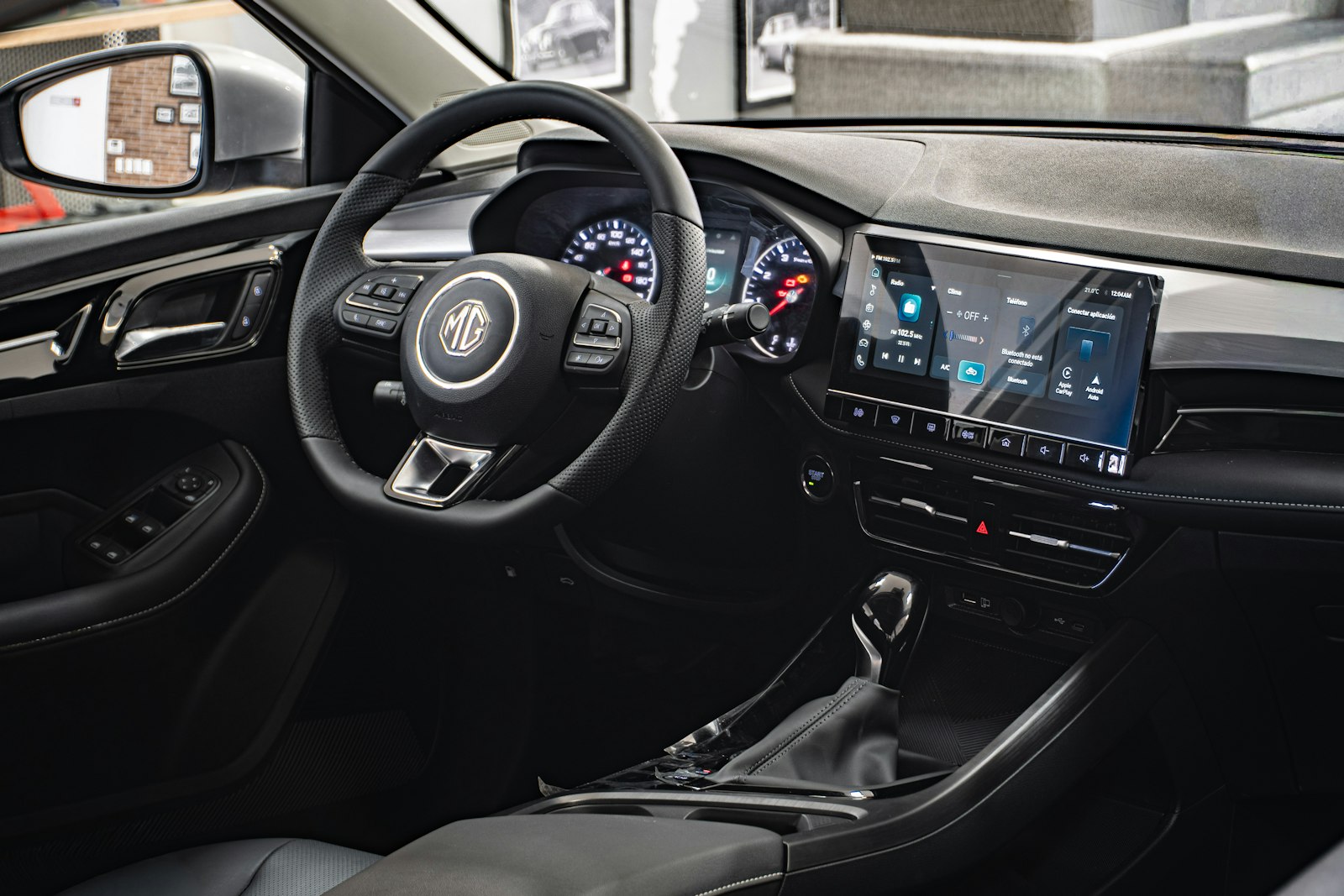
If you bought your vehicle in the last few years, it almost certainly relies on a network of cameras, radar units, and sensors that work together to keep you safer on the road. Lane departure warning, automatic emergency braking, adaptive cruise control, blind spot monitoring, forward collision alerts. These features have become standard equipment, and most drivers use them every day, often without thinking about them.
What many drivers don’t realize is what happens to those systems after a collision. Even a minor accident can knock these sensors out of alignment by a fraction of a degree, which is enough to make them unreliable, and in some cases, dangerous. ADAS calibration is the process of restoring those systems to factory specification after a repair, and it’s become one of the most important steps in modern collision repair.
What ADAS Actually Is
ADAS stands for Advanced Driver Assistance Systems. It’s an umbrella term covering the suite of safety and convenience features that use sensors and software to monitor a vehicle’s surroundings and either warn the driver or intervene directly. The most common ADAS features include:
- Forward collision warning and automatic emergency braking
- Lane departure warning and lane keeping assist
- Adaptive cruise control
- Blind spot monitoring
- Rear cross-traffic alert
- 360-degree camera systems
- Parking assist
These systems rely on a combination of forward-facing cameras (usually mounted near the rearview mirror), radar units (often behind the front grille and rear bumper), ultrasonic sensors (typically along the bumpers), and sometimes lidar units on higher-end vehicles. All of these components feed data into the vehicle’s computer, which interprets that data and either alerts the driver or controls the brakes, steering, or throttle.
Why a Collision Affects ADAS Sensors
ADAS sensors are calibrated to extremely tight tolerances. A forward-facing camera, for example, needs to be aimed precisely so that its image of the road is interpreted correctly by the software. A radar unit needs to be pointed in the exact direction the vehicle is moving so it can correctly judge distance and closing speed of objects ahead.
When a vehicle is in a collision, several things can disturb that calibration:
Direct Impact
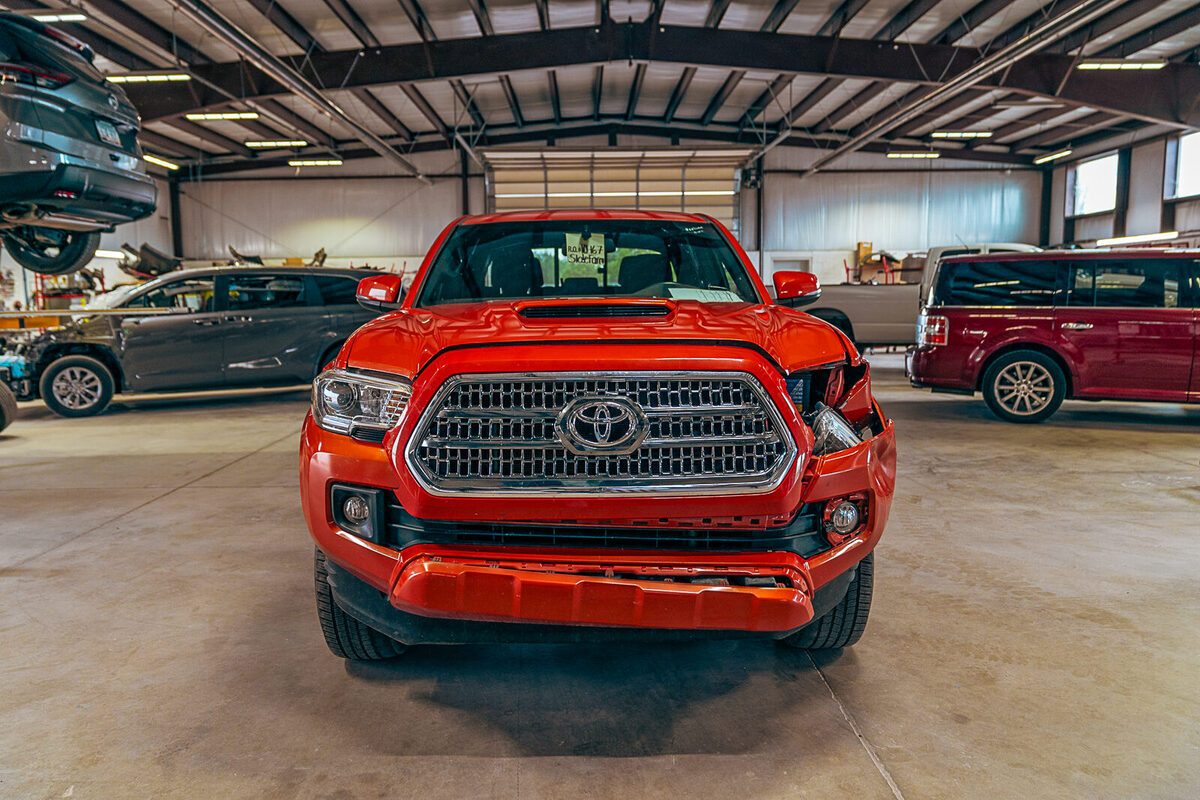
Any front-end collision is likely to affect the forward camera, the front radar, and the front parking sensors. Even a low-speed bumper hit can shift sensor positions enough to throw them out of spec. Rear collisions affect the rear radar and rear-view camera. Side impacts can affect blind spot monitors and side cameras.
Glass Replacement
Many forward-facing cameras are mounted to the windshield. Replacing a windshield, even for an unrelated reason like a rock chip, almost always requires recalibrating the camera afterward. Skipping this step is one of the most common ADAS issues that show up after seemingly routine glass work.
Suspension and Alignment Changes
If a collision involved suspension damage, or if the vehicle’s alignment was knocked out of spec, ADAS sensors that are calibrated to the vehicle’s factory ride height and geometry may now be pointing in the wrong direction relative to the actual road. Even when the sensors themselves were never touched, the change in vehicle geometry can affect how their data is interpreted.
Body Panel Replacement
Bumper covers, fenders, and quarter panels often house ADAS sensors. Anytime one of these panels is repaired or replaced, the sensors mounted to it have to be checked and typically recalibrated.
Static vs. Dynamic Calibration
There are two main types of ADAS calibration, and many vehicles need both.
Static calibration is performed in a controlled shop environment. The vehicle is placed on a level floor at a precise distance from manufacturer-specific calibration targets, which are panels with reference patterns that the vehicle’s sensors use to establish their reference points. The technician runs a calibration procedure using a scan tool, which directs the sensors to recognize the targets and self-adjust to factory specification.
Dynamic calibration is performed by driving the vehicle on actual roads under specific conditions: a certain speed range, often a minimum distance, with clear lane markings and good weather. The vehicle’s sensors observe real-world conditions and complete their calibration through use.
The right calibration method depends on the vehicle, the systems involved, and the manufacturer’s service procedures. Some vehicles require static calibration only. Others require dynamic only. Many require both.
What Happens If Calibration Is Skipped
This is the part that drivers often don’t realize: a vehicle with miscalibrated ADAS sensors usually doesn’t throw a warning light or any obvious indicator. The systems still appear to work. Lane keeping assist still nudges the steering when the camera thinks the vehicle is drifting. Automatic emergency braking still triggers when the radar reads a closing object.
The problem is what those systems are reading. A camera that’s aimed slightly off may interpret lane markings incorrectly, causing the steering assist to drift the vehicle in the wrong direction. A radar that’s pointing at the wrong angle may not detect a stopped vehicle ahead until it’s too close, or may falsely detect objects that aren’t there.
In other words, an uncalibrated ADAS system isn’t obviously broken. It’s quietly unreliable, which is arguably more dangerous than a system that simply doesn’t work at all.
Why Every Modern Collision Repair Should Include an ADAS Assessment
Because the consequences of skipped calibration are invisible until something goes wrong, it’s become standard practice in quality collision repair to assess every vehicle’s ADAS systems as part of the post-repair process. That includes scanning the vehicle’s computer for any sensor-related fault codes, identifying which systems are present on the specific vehicle, and following the manufacturer’s service procedure for any system that may have been affected by the collision or the repair work.
This is one of the areas where shop certification and ongoing training matter most. I-CAR Gold Class certified shops are required to maintain current training on ADAS procedures, which is reassessed continuously as vehicle technology changes.
Questions to Ask Your Shop About ADAS
Before approving a collision repair, especially on a vehicle from the last five to seven years, it’s reasonable to ask:
- Does my vehicle have ADAS features, and which ones may have been affected by the collision?
- How will those systems be tested and calibrated as part of the repair?
- Will calibration be done in-house, or sublet to another facility?
- Will the calibration be documented in writing as part of the final repair record?
A shop that handles these questions clearly is one that takes the safety side of collision repair seriously. A shop that’s vague about ADAS, or treats it as an upsell rather than a standard part of the work, is one to be cautious about.
Modern Repair, Modern Standards
Heck’s Collision Center handles ADAS calibration as a standard part of collision repair for vehicles equipped with these systems. The shop follows manufacturer service procedures and documents calibration work as part of every repair record.
Browse completed repair examples or read what local drivers have said about their experience.
Heck’s Collision Center
2701 Porter Mountain Rd., Lakeside, AZ 85929
928.368.2288
Monday to Friday: 8:00 AM to 5:00 PM
Request your free estimate online. Proudly serving Show Low, Pinetop-Lakeside, Lakeside, Snowflake, Taylor, and all of Northeastern Arizona.
‹ Back